How to Digitalize Your Prevention Plan with External Contractors

On industrial sites, work carried out by external contractors represents a significant share of both
activity and operational risk. Construction work, maintenance, inspections, and specialized
services all require strong coordination, rigor, and effective information sharing
Process digitalization : Excel vs digital EHS tools — what are the real benefits?

In the industrial sector, EHS teams have to manage a wide range of critical processes: safety inductions, contractor management, external company management, qualification and certification tracking, document verification, and more. These activities are at the core of day-to-day site operations and require rigor, traceability, and strong coordination. However, when they are managed with unsuitable tools, they quickly become time-consuming, error-prone, and difficult to control.
For a long time, Excel has been the default solution. Simple, widely used, and easy to customize, it has proven useful in many situations. But as EHS requirements evolve, traceability expectations increase, and data volumes grow, Excel quickly reaches its limits. Digital platforms such as didactum have emerged as a more robust and secure alternative. So what does a digital EHS tool really bring compared to spreadsheets?
Why digitalize driver safety protocols on industrial sites?
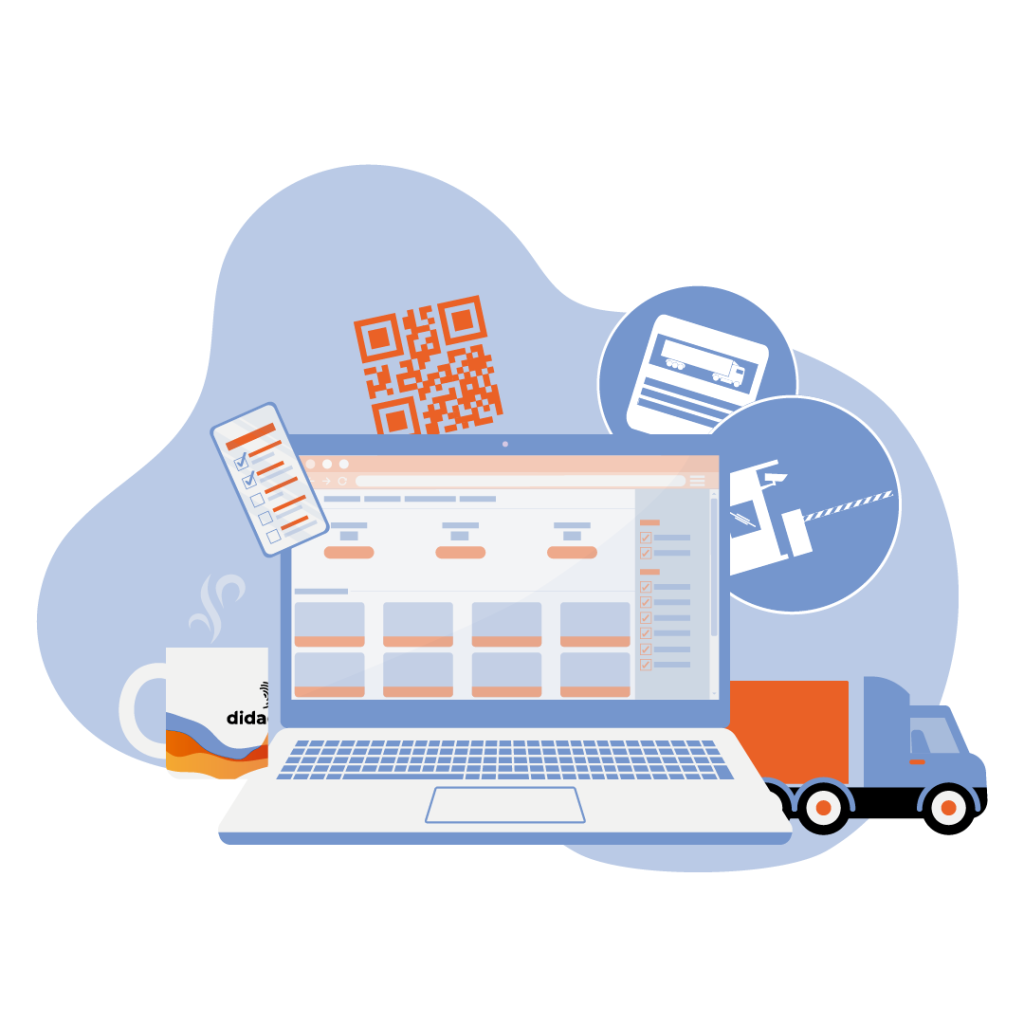
On an industrial site, loading and unloading operations are particularly sensitive phases. They involve drivers—often from different nationalities—who are unfamiliar with the facilities, specific risks, traffic zones, or the site’s operating procedures. These operations may involve hazardous materials, heavy equipment, or complex layouts. This is precisely why regulations require a dedicated safety protocol, commonly referred to as a driver safety protocol, defined in Articles R.4515-1 and following of the French Labor Code.
How digitalization is transforming safety culture in industry

Digitalization plays a key role in evolving safety culture within industrial companies. By modernizing safety induction and risk awareness processes, it improves prevention, employee engagement, and operational efficiency.
5 reasons to digitalize your safety inductions
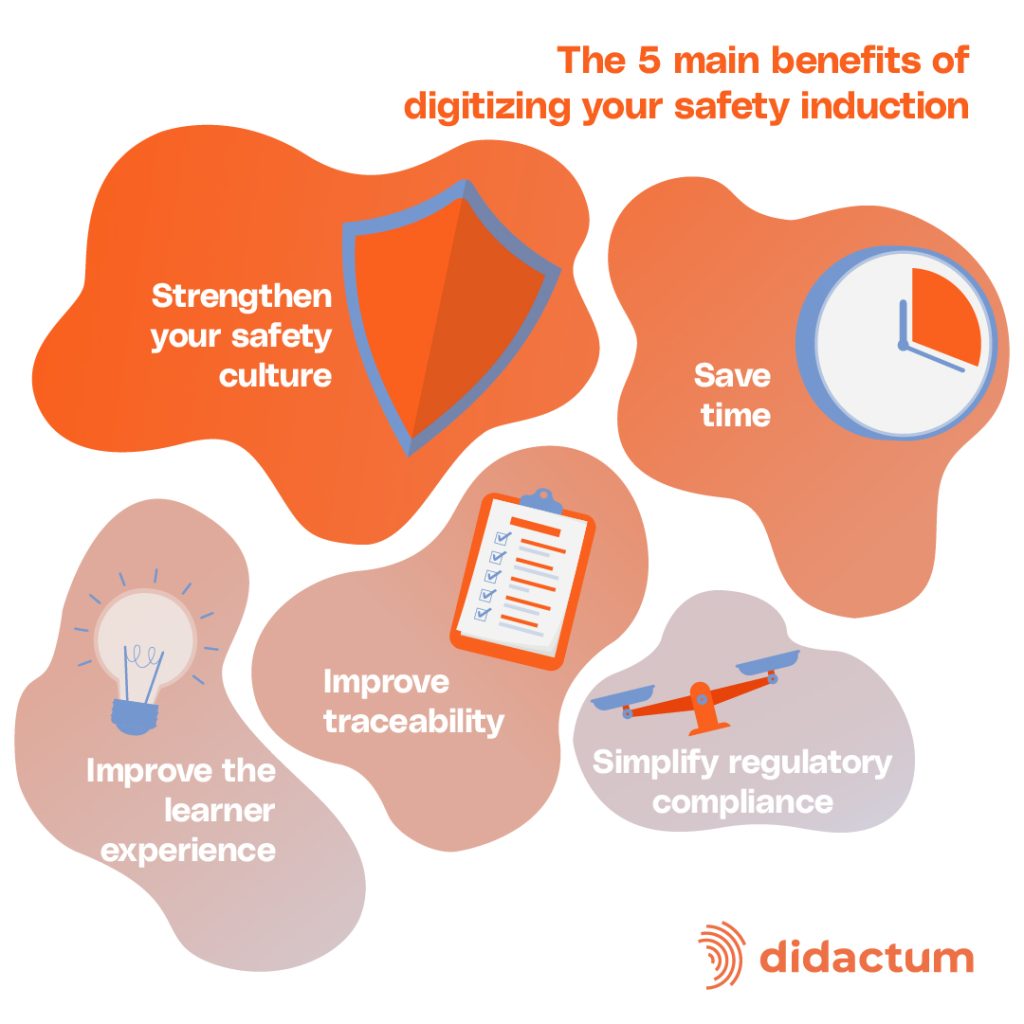
In a world where workplace safety is critical, digitizing safety inductions has become a must-have solution for companies looking to protect their workforce while optimizing their processes. Discover the five key reasons why the digital transformation of your safety inductions is now essential—and how it can revolutionize your approach to workplace safety.
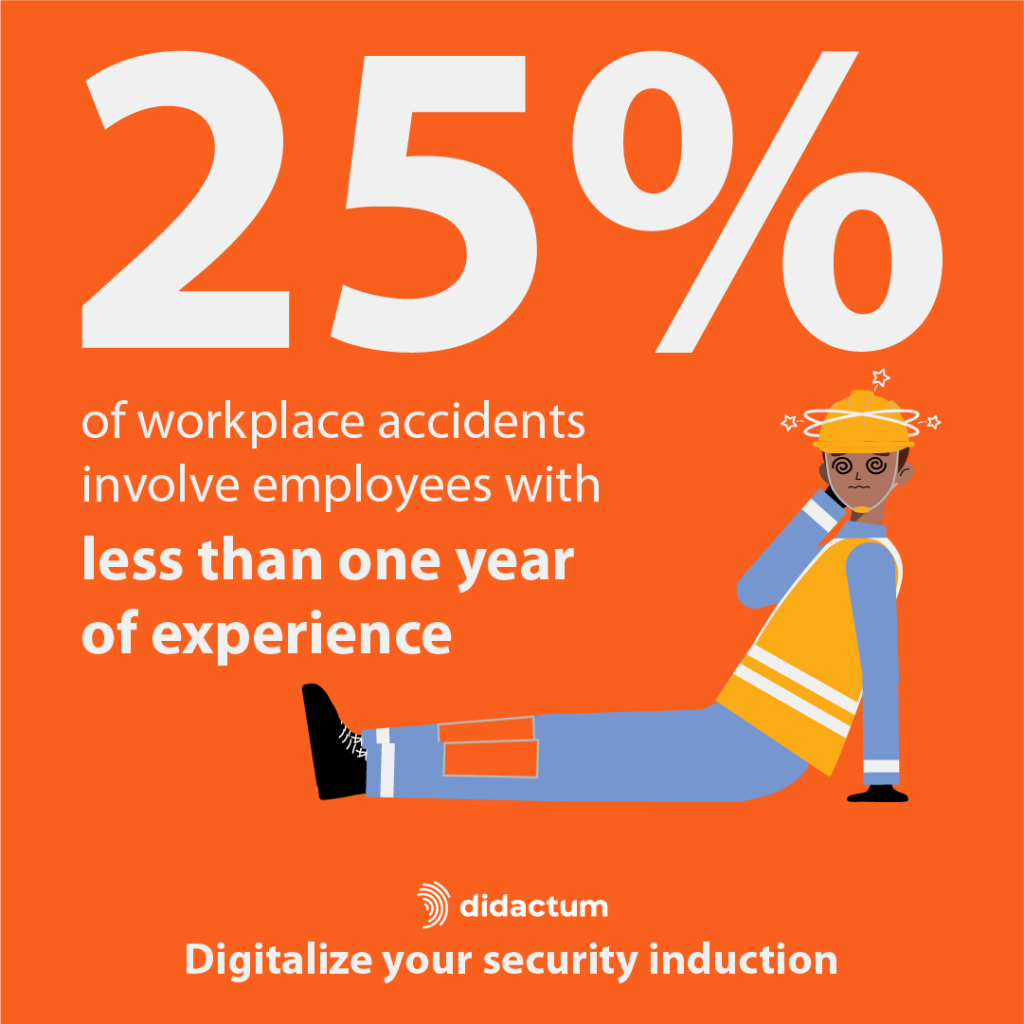
Workplace Safety: why are new employees the most vulnerable?
The last step in your Safety Induction digitalization journey: deploying your solution and supporting your teams through the change for a successful, lasting rollout.
How to implement a digital safety induction solution
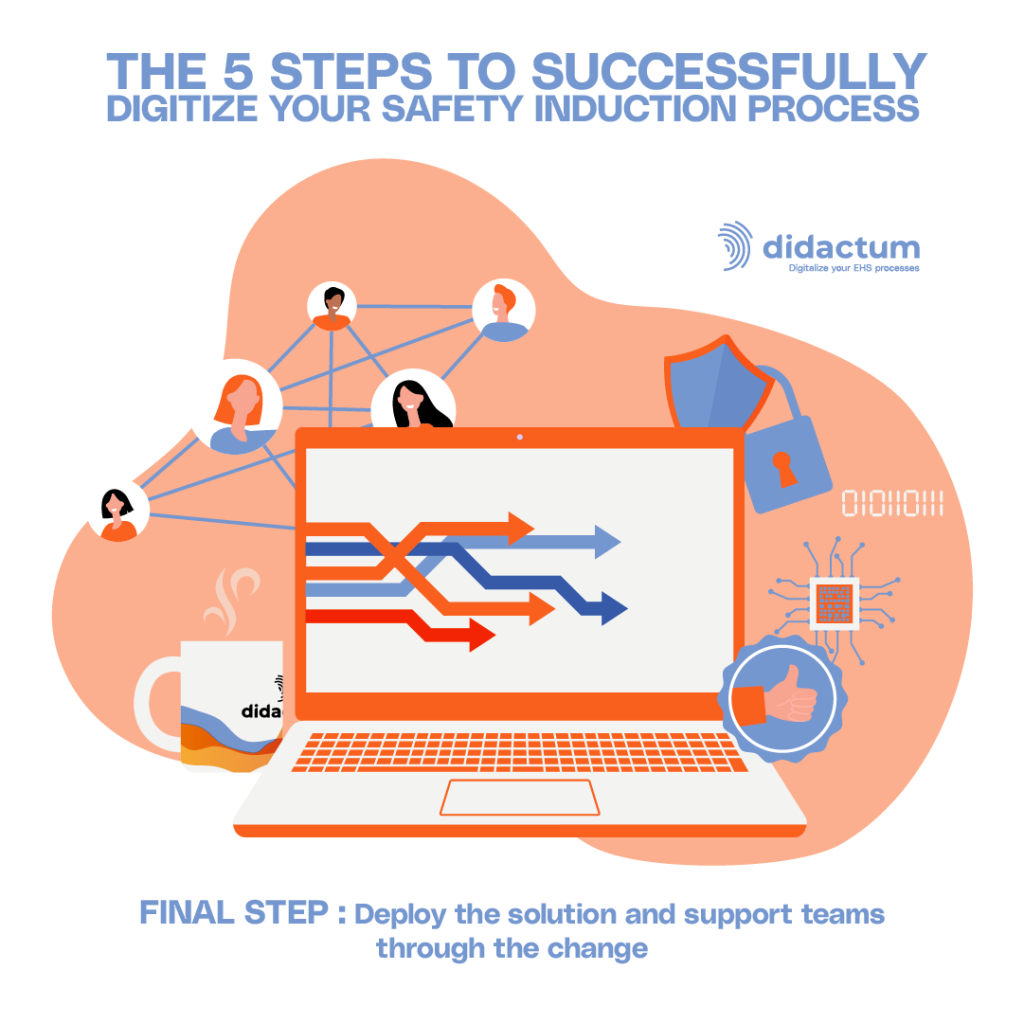
The last step in your Safety Induction digitalization journey: deploying your solution and supporting your teams through the change for a successful, lasting rollout.
Why customize your chosen platform to digitalize your safety induction process?
Once you have selected the right software solution to manage your Safety Induction process, it must also adapt seamlessly to your organization — integrating your own safety procedures, induction forms, electronic badges, and other essential elements
How to choose the right software solution to digitalize your safety induction process?
Going digital for Safety Induction, new employee training, and visitor awareness can deliver significant benefits. But how do you choose the right software platform for your industrial company?
Succeeding at safety induction digitalization: Step 1
Digitalizing the Safety Induction process in an industrial company is a key driver for improving worker safety and simplifying the day-to-day management of safety procedures.
In this article, we explore the first fundamental step to successfully digitalizing your Safety Induction process: assessing your company’s specific needs and defining the goals you want to achieve.