
EHS digitalization: field-driven initiatives at the heart of successful projects
In many organizations, EHS digitalization projects stem from a legitimate desire to improve processes, standardize practices, or strengthen the management of activities.
These initiatives are often driven by senior management or corporate teams, with a broad view of the challenges to be addressed.
Yet when we look at projects that deliver the most lasting results, one observation comes up regularly: they do not always start with a transformation strategy.
They often start with a concrete problem. An EHS manager spending several hours each week following up with contractors, a team still managing mandatory training renewals across multiple files, a site dealing with a growing volume of Safety Inductions, or a clearly identified operational challenge.
These friction points are often where the most effective projects begin.
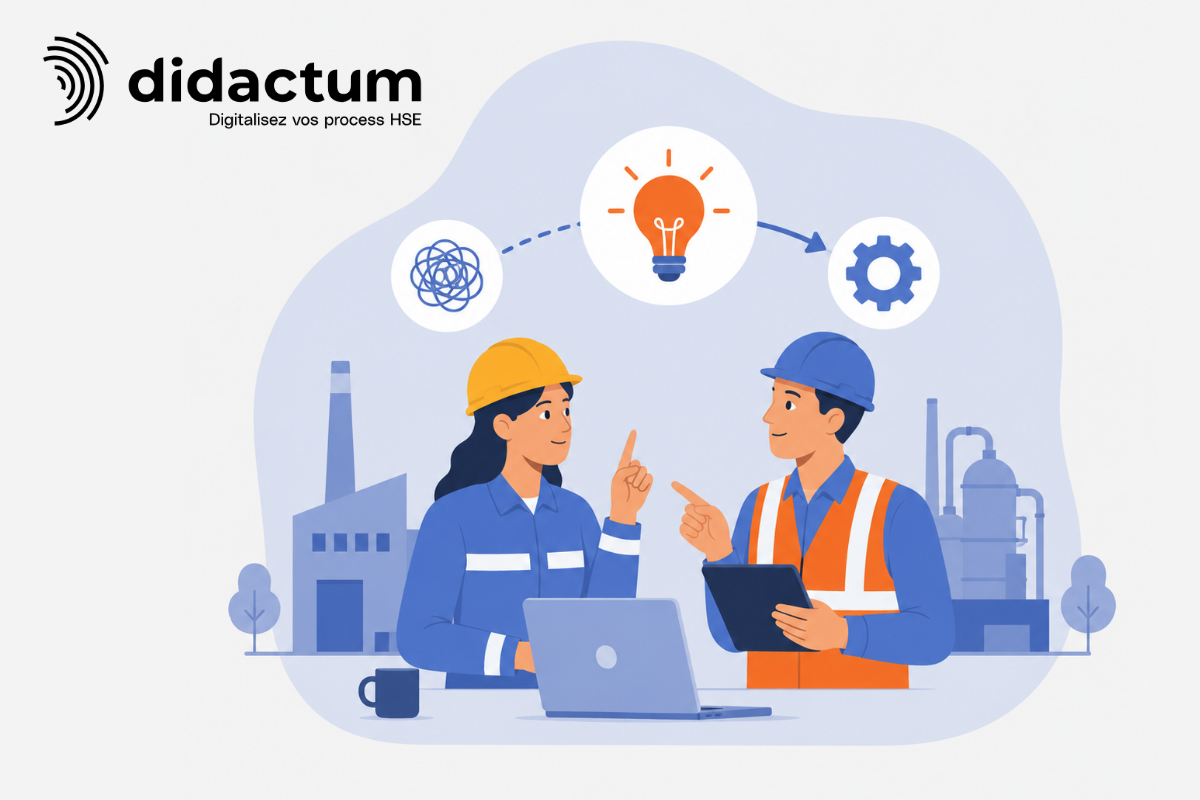
Users are more likely to engage around a real problem
Digitalization is rarely an objective in itself. For site teams, what matters most is solving a day-to-day problem. When a project addresses a visible challenge, its benefits are immediately understandable. Users know why the change is being introduced and quickly see the value it brings. Adoption then becomes more natural.
By contrast, initiatives presented solely in terms of transformation or standardization may seem more disconnected from operational concerns. Even when the objectives are relevant, their concrete impact can sometimes be difficult for teams to perceive.
Field-level friction points reveal the real priorities
EHS projects cover many different areas:
- Safety Induction
- Training
- Contractor management
- Audits
- Document management
- Qualifications and authorizations
- Corrective actions
With such a wide range of topics, identifying priorities can be difficult. This is where the field plays an essential role.
Recurring difficulties often help identify the areas generating the greatest administrative workload, risks, or inefficiencies. These signals generally provide a strong starting point for building a digitalization roadmap. They make it possible to focus efforts on issues whose impact can be seen immediately.
Early results create momentum
One of the advantages of field-driven initiatives is their ability to deliver tangible results quickly.
When an identified problem is solved, the benefits become visible to all stakeholders: users save time, processes become smoother, and teams see a concrete improvement in their day-to-day work.
This momentum can then facilitate the development of other projects. Positive feedback and results build confidence and make it easier to approach the next stages of the transformation.
The corporate organization still plays an essential role
Highlighting field-driven initiatives does not mean that projects should be managed solely at the local level. The most effective approaches generally combine two complementary perspectives.
The field identifies real needs, while the corporate organization provides the vision, resources, and framework needed to structure projects and ensure consistency.
This combination makes it possible to benefit both from the sites’ operational proximity and from the organization’s ability to coordinate and manage projects. The objective is therefore not to oppose the two approaches, but to make them work together.
The most effective transformations often start with a concrete need
In EHS projects, ambitious transformation goals are important. They provide direction and help build a shared vision. However, the most robust approaches often rely on something much simpler: they first address a problem that teams encounter every day.
This ability to start from actual usage is what makes it possible to build projects that are useful, adopted, and capable of delivering lasting results. In most cases, successful transformations do not start with a tool. They start with a clearly identified need in the field.
Building EHS projects around on-site realities
Digitalization projects generally deliver the best results when they address concrete issues encountered by teams in their day-to-day work. Before defining processes or rollout methods, it is essential to understand existing practices (2), operational constraints, and the expectations of the different stakeholders involved.
This is the approach didactum takes when supporting its customers. Our teams work closely with EHS managers, supervisors, and site users to design solutions that address real needs rather than a theoretical model. This listening and co-creation phase helps build team buy-in while creating approaches that are easier to deploy and more sustainable over time.
Why didactum favors phased approaches
At didactum, multi-site projects generally begin with a pilot phase before any wider rollout. This approach allows EHS teams to observe actual usage, identify necessary adjustments, and establish a more robust framework before scaling up.
L’objectif n’est pas de ralentir le projet, mais de sécuriser son adoption. Les retours des premiers utilisateurs, les spécificités locales et les contraintes opérationnelles sont intégrés progressivement afin de préparer un déploiement plus fluide sur les autres établissements.
This approach often helps reduce differences in how the tool is used across sites while strengthening engagement among field teams.
Ready to start digitalizing your EHS processes?
For 30 years, didactum has been helping EHS teams through this transformation with a SaaS platform designed around the realities of industrial operations. If you want to simplify the management of your prevention plans while strengthening compliance, contact our team to discuss your needs.
We put this expertise to work to guide you through your digitalization project and help you digitalize your EHS processes.
Our experts are, of course, available to support you throughout this transformation.
Contact us today for a personalized consultation and discover how our solutions can precisely meet your needs.
FAQ
Digitalizing your EHS processes helps strengthen regulatory compliance, improve data traceability, and simplify document management. Didactum enables industrial sites to replace paper and Excel-based systems with more reliable digital workflows.
The most relevant processes include safety induction, prevention plans, driver safety protocols, permit-to-work, and safety training tracking. Didactum structures these processes within a SaaS platform designed for real-world industrial operations.
Digitalized EHS processes help reduce errors, duplicate entries, document loss, and manual follow-ups. With didactum, EHS teams gain better visibility, faster response times, and improved operational performance.
A strong EHS platform should centralize information, track approvals, simplify workflows, and provide clear visibility into ongoing processes. Didactum addresses these needs with a SaaS solution designed for industrial sites and real-world operational constraints.
 Contact us