
Multi-site EHS: should you standardize practices before digitalizing?
When a company launches an EHS digitalization project across multiple sites, one question comes up almost every time:
Should you standardize practices first and then digitalize? Or launch digitalization to accelerate standardization?
On paper, the answer seems obvious. Why digitalize a process if sites are not yet operating in the same way?
Yet in practice, this approach can sometimes leave projects stalled for months. When working across multiple facilities, perfect standardization is rare. Waiting until everything is fully aligned before taking action can therefore mean postponing the project indefinitely.
The trap of “we’ll digitalize when everything is aligned”
In many industrial organizations, differences between sites are a reality. Procedures may have the same name, but their application can vary. Responsibilities are not always distributed in the same way, legacy tools differ from one facility to another, and some teams have developed their own methods over the years.
Faced with this diversity, it can be tempting to wait until all processes are fully standardized before launching a digitalization project. The intention is understandable, but in practice, this objective is rarely achieved.
Every workshop reveals new specificities, each site has its own constraints, and each manager defends practices they consider relevant. The project can then remain stuck in a preparation phase for an extended period.
Differences sometimes only become visible through actual use
One of the challenges of standardization is that it often relies on theoretical discussions. Teams compare their practices, discuss processes, and try to build a common model.
Yet some differences only become apparent when users start working with the same tool or following the same workflow.
A step that seemed identical on paper is ultimately carried out differently. An approval considered essential at one site turns out to be unnecessary at another. A process considered simple becomes more complex when applied at scale.
These discoveries are an integral part of the project. Postponing them does not prevent them from emerging; it simply delays the point at which they will need to be addressed.
Digitalization can become a catalyst for standardization
The most effective projects often take a different approach. Rather than seeking perfect standardization before getting started, they define a sufficiently clear common framework to launch the project.
The main principles are shared:
- responsibilities;
- data to be tracked;
- traceability requirements;
- key process steps.
This approach makes it possible to move forward while retaining the ability to adapt. Teams work with real-world situations rather than assumptions, and decisions become easier because they are based on field experience.
Avoid digitalizing disorder
However, the opposite approach also comes with risks. Launching a project without any common framework can quickly lead to existing differences being reproduced in a new tool.
Each site may retain its own methods, making indicators difficult to compare and gradually reducing consistency in management at the organization level.
Digitalization therefore does not replace standardization efforts. It should not be used to lock in practices that have never been clarified. A minimum level of structure remains essential before launching the project.
Finding the right level of standardization
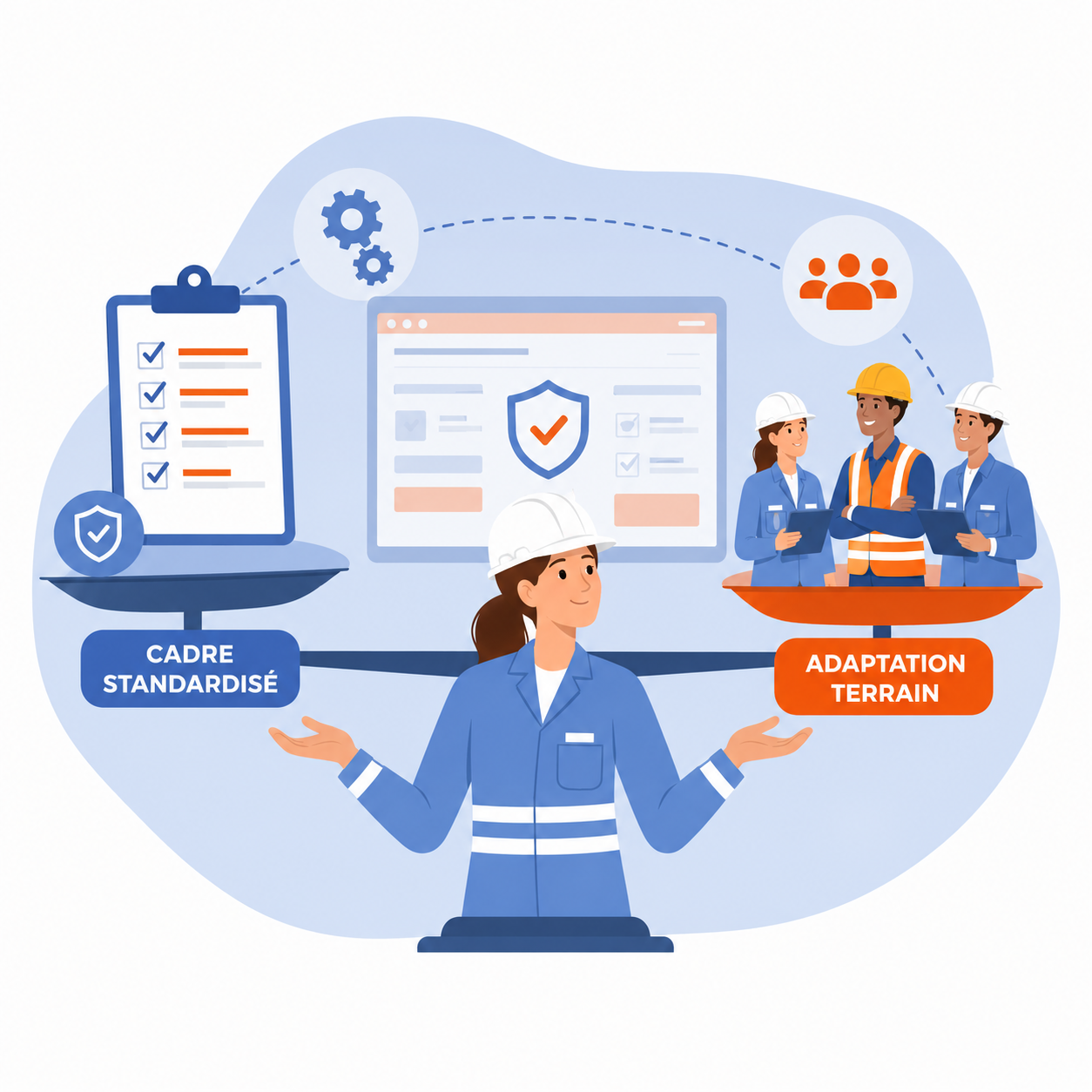
The real question is ultimately not whether standardization should happen before or after digitalization. It is about determining what needs to be standardized before the project starts and what can evolve afterward.
The most robust projects establish a common framework from the outset: shared objectives, the data to be collected, regulatory requirements, and the main management rules. At the same time, some implementation methods continue to evolve based on field experience.
This approach makes it possible to balance organization-wide consistency with local realities.
Standardization and digitalization often move forward together
In multi-site EHS projects, standardization is not always a prerequisite for digitalization. It often becomes one of its outcomes.
New ways of working gradually reveal differences between sites. Field feedback helps refine practices, and standards become stronger as the project matures.
Organizations that successfully implement these projects are rarely those that wait until everything has been standardized before taking action. They generally have a framework solid enough to get started while retaining the flexibility needed to learn and adjust their practices.
Because when it comes to EHS, the best standards are not always the ones defined in meeting rooms. Above all, they are the ones that stand up to the realities of the field.
How didactum supports this balancing phase
In multi-site projects, didactum teams regularly see organizations hesitate between standardizing their practices and launching their digitalization efforts. In reality, these two approaches often move forward together.
The support provided focuses on identifying the common framework needed to get the project started while leaving room for adjustments based on actual usage. This approach makes it possible to progressively build shared standards without holding initiatives back in pursuit of a theoretically perfect model.
Ready to start digitalizing your EHS processes?
For 30 years, didactum has been helping EHS teams through this transformation with a SaaS platform designed around the realities of industrial operations. If you want to simplify the management of your prevention plans while strengthening compliance, contact our team to discuss your needs.
We put this expertise to work to guide you through your digitalization project and help you digitalize your EHS processes.
Our experts are, of course, available to support you throughout this transformation.
Contact us today for a personalized consultation and discover how our solutions can precisely meet your needs.
FAQ
Digitalizing your EHS processes helps strengthen regulatory compliance, improve data traceability, and simplify document management. Didactum enables industrial sites to replace paper and Excel-based systems with more reliable digital workflows.
The most relevant processes include safety induction, prevention plans, driver safety protocols, permit-to-work, and safety training tracking. Didactum structures these processes within a SaaS platform designed for real-world industrial operations.
Digitalized EHS processes help reduce errors, duplicate entries, document loss, and manual follow-ups. With didactum, EHS teams gain better visibility, faster response times, and improved operational performance.
A strong EHS platform should centralize information, track approvals, simplify workflows, and provide clear visibility into ongoing processes. Didactum addresses these needs with a SaaS solution designed for industrial sites and real-world operational constraints.
 Contact us