
Multi-Site EHS Digitalization: Where Should You Start to Structure Your Rollout?
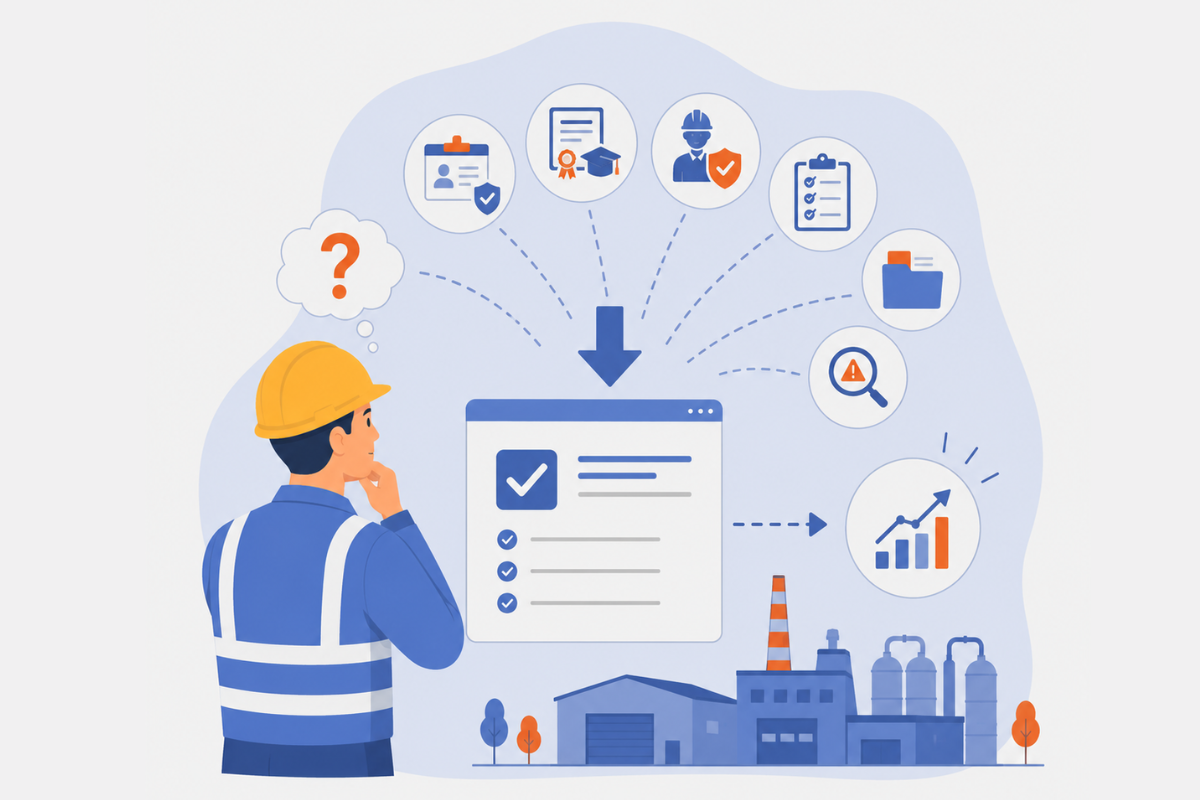
When an industrial group decides to accelerate its EHS digitalization, the first question is not always which tool to choose. More often, it is a much simpler one:
There is no shortage of potential areas to address: safety induction, regulatory training, authorization management, contractor management, document management, audits, action plans…
Faced with such a wide range of possibilities, it can be tempting to tackle several initiatives at the same time. Yet projects that successfully scale across multiple sites generally follow a different approach: they start with a clearly identified area that can demonstrate its value quickly.
The Pitfall of an Overly Ambitious Project
When a digitalization initiative gets underway, expectations are often numerous: each site has its own needs, each manager wants to improve certain processes, and teams quickly see the potential benefits of greater harmonization…
This momentum is positive, but it can lead to a first pitfall: trying to transform everything at once.
The broader the initial scope, the more difficult it becomes to engage teams, measure results, and deliver visible benefits quickly. By contrast, the projects that move forward most effectively often start with a more focused objective.
Identify Shared Pain Points
The best starting point is rarely the most strategic process. It is often the one that causes the most frustration in day-to-day operations: an EHS manager spending several hours each week organizing safety inductions, teams managing training records across multiple files, site managers lacking visibility into authorizations that need to be renewed, or contractors submitting their documents at the last minute.
These situations offer an important advantage: everyone immediately recognizes the problem, making the benefits easier to demonstrate.
Choose a Topic Shared by Multiple Sites
In a multi-site environment, a second criterion becomes essential.
The chosen topic should concern several sites. However, the goal is not necessarily to find a process that is perfectly identical everywhere. Instead, it is about identifying an issue that is shared widely enough to justify a common approach.
This is often what makes topics such as the following successful starting points:
- safety induction;
- regulatory training;
- authorization tracking;
- contractor management.
These processes exist in most organizations and generally involve multiple sites. They therefore provide a strong foundation for building common practices.
Look for Benefits That Are Visible Quickly
One of the challenges of transformation projects is their timeline.
When results only become visible after several years, it becomes more difficult to maintain team engagement.
By contrast, some areas can deliver noticeable gains quickly:
- reduced administrative workload;
- improved traceability;
- simpler processes;
- better visibility into data.
These early results play an important role: they help build trust and often make the next stages of the rollout easier to implement.
Build the Approach Progressively
Once the first initiative has been identified, the project can gradually expand. As teams gain experience, processes become more structured and standards become clearer. Feedback from the field can then be used to adjust the approach and progressively improve practices.
This gradual approach is often more effective than attempting a full-scale transformation from the outset: it allows teams to experiment, learn from field experience, and build knowledge before rolling the approach out more broadly.
Discover the Tepsa France case study on how to digitalize and harmonize safety induction across a group.
→ Discover the customer case study
Start with the Topic That Will Create Momentum
When an organization operates across multiple sites, the question is not which processes could be digitalized. Most of them can.
The real challenge is to determine:
What is the first initiative that can demonstrate the value of the approach in concrete terms?
The most effective projects rarely start with the most complex topic. They generally focus on a clearly identified need that is shared by several sites and visible enough to engage teams. This first initiative makes it possible to test the approach in real-world conditions, learn from the experience, and lay the groundwork for a broader rollout.
Because in a multi-site EHS project, successful deployment often depends less on choosing the first tool than on choosing the first problem to solve.
How didactum Supports the First Digitalization Initiatives
During multi-site projects, didactum teams regularly support EHS managers during this prioritization phase. The goal is not to digitalize every process from the outset, but to identify use cases that can quickly deliver value to teams and create positive momentum for the next stages of the rollout.
The topics most frequently selected include safety induction, regulatory training, and contractor management, as they often combine operational challenges, traceability requirements, and opportunities for harmonization across sites.
Ready to start digitalizing your EHS processes?
For 30 years, didactum has been helping EHS teams through this transformation with a SaaS platform designed around the realities of industrial operations. If you want to simplify the management of your prevention plans while strengthening compliance, contact our team to discuss your needs.
We put this expertise to work to guide you through your digitalization project and help you digitalize your EHS processes.
Our experts are, of course, available to support you throughout this transformation.
Contact us today for a personalized consultation and discover how our solutions can precisely meet your needs.
FAQ
Digitalizing your EHS processes helps strengthen regulatory compliance, improve data traceability, and simplify document management. Didactum enables industrial sites to replace paper and Excel-based systems with more reliable digital workflows.
The most relevant processes include safety induction, prevention plans, driver safety protocols, permit-to-work, and safety training tracking. Didactum structures these processes within a SaaS platform designed for real-world industrial operations.
Digitalized EHS processes help reduce errors, duplicate entries, document loss, and manual follow-ups. With didactum, EHS teams gain better visibility, faster response times, and improved operational performance.
A strong EHS platform should centralize information, track approvals, simplify workflows, and provide clear visibility into ongoing processes. Didactum addresses these needs with a SaaS solution designed for industrial sites and real-world operational constraints.
 Contact us